
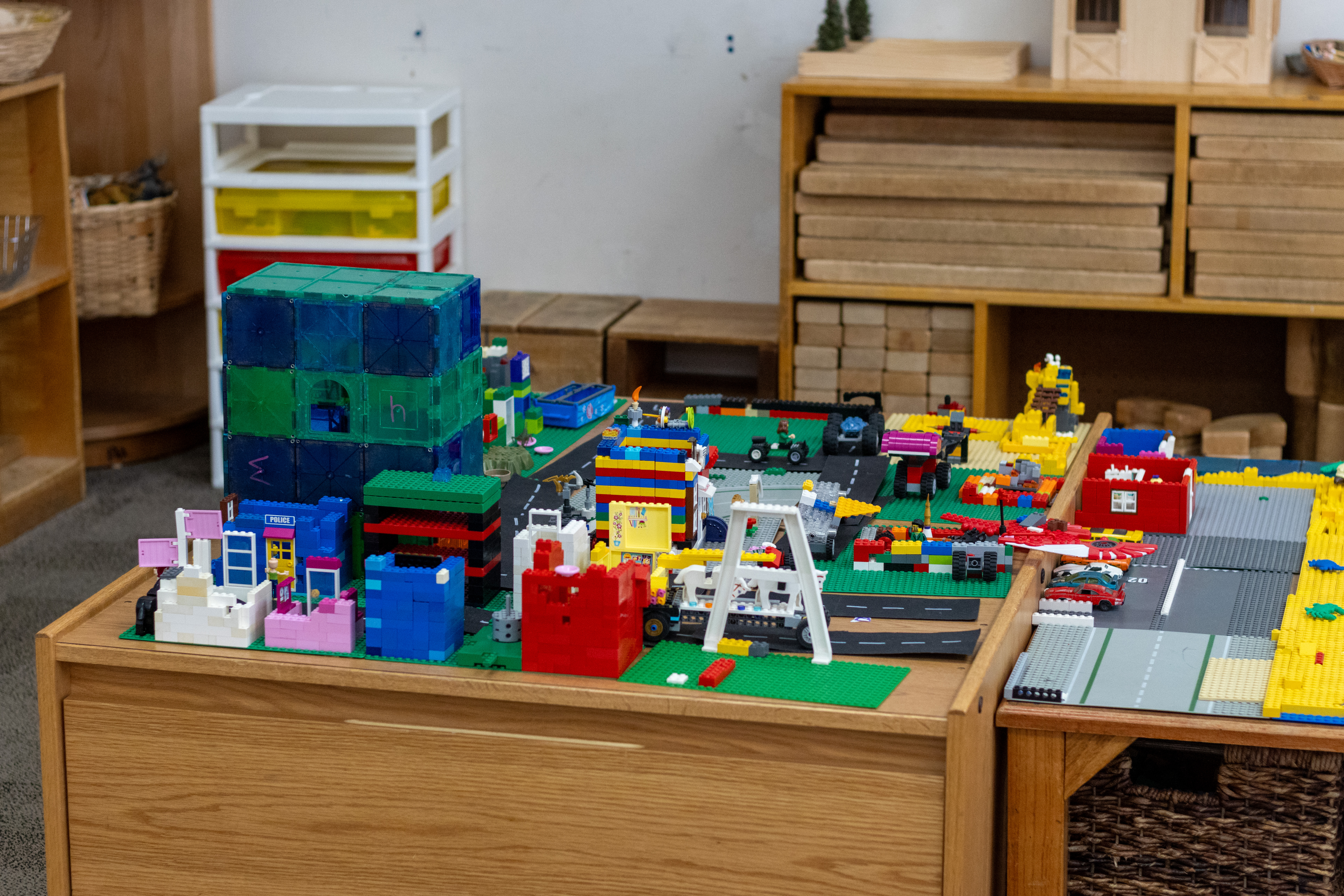
The Child Development Center (CDC) was buzzing with a special kind of energy this week as it hosted Kent City Mayor Jack Amrhein for the highly anticipated Lego City Grand Opening. The ribbon-cutting ceremony marked a full-circle moment for the kindergarteners, who originally met with the mayor earlier in the academic year. Inspired by that meeting, the students spent months designing and assembling their own miniature metropolis.

For Mayor Amrhein, celebrating his 70th birthday, the visit was more than just a ceremonial duty, it was a return to his academic roots. As a proud Kent State alumnus, the mayor holds a degree in social studies and a minor in secondary education. Having spent 32 years as a social studies teacher in the Kent City Schools, Amrhein brought a unique educator's perspective to the students' work.
“Lego play is a universal language that transcends generations,” said Monica Miller Marsh, CDC Executive Director and Associate Professor of Early Childhood Education in the College of Education, Health and Human Services. “The popularity of these bricks stems from their family-friendly nature, creating an atmosphere where parents and children can learn side-by-side. It’s not just play; it’s a shared experience that fosters community and creativity.”
Cutting-Edge Learning Techniques
The Lego City project is yet another example of the CDC's "cutting-edge" approach to early childhood education by integrating high-level standards into play-based learning. To facilitate learning with interactive technology, students used Blue-Bots as digital tools to help them meet technology standards, develop spatial reasoning and develop a comfort level using robotics.
Similarly, Legos support the journey of young learners by providing a "low-floor, high-ceiling" environment—allowing students to create anything and "go" anywhere their imagination leads, from the depths of the ocean to outer space.
A Global Phenomenon
The project also touched on Lego's status as a global phenomenon. Since 1958, the company has produced over 600 billion bricks. With enough Lego bricks in existence to circle the Earth more than 18 times, the children at the CDC are part of a massive worldwide community of builders.
"Seeing these students apply what we discussed about community into this incredible Lego City is a testament to the power of hands-on learning," said Sara Knapp, a kindergartner instructor at the CDC. "As a teacher, I know that when children are engaged, they aren't just playing, they are building the foundations necessary to grow and learn new skills."