
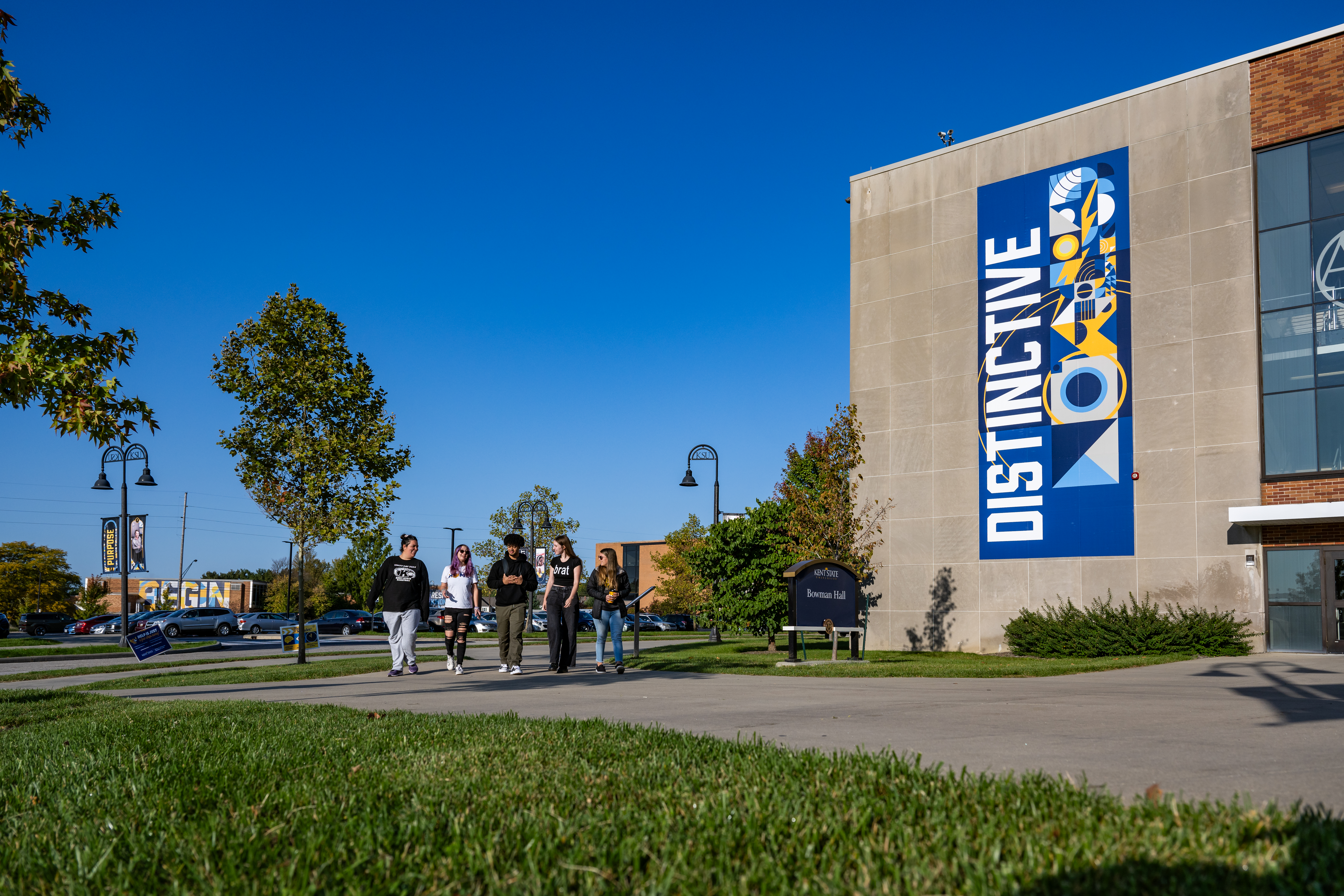
Kent State University wasn’t just where alumna Julia Ryan went to school; it was part of her life growing up in Northeast Ohio with her father, Frank X. Ryan, Ph.D., associate professor and undergraduate coordinator of philosophy.
“I kind of grew up on the Kent State campus,” Ryan said. “It was always a shoo-in: ‘I know I’m going to Kent, but what is it going to be for?’”
Raised in a family that valued the humanities, Ryan decided to major in history and minor in political science.
“History was always a big interest for me,” she said. “For a while, I tottered between theater or something else, but history won out.”
Learning to “Hone the Craft”
During her time at Kent State, Ryan found inspiration in the faculty who helped her develop.

“There were so many faculty members who really did an excellent job of helping us—they called it ‘honing our craft,’” she said, naming Mary Ann Heiss, Ph.D., Richard Steigmann-Gall, Ph.D., and now retired professor Clarence E. Wunderlin Jr., Ph.D., among her most memorable mentors.
Though she loved the discipline, Ryan realized early on that the academic track wasn’t for her.
“It can be very inorganic and once you get into a certain niche in academia, that’s kind of where you have to settle,” she said. “I didn’t know exactly what I wanted to do, but I knew I didn’t want to be in academia.”
Finding Her Path After Graduation
After earning her degree, Ryan briefly entered Kent State’s online Master of Library and Information Science program but discovered it wasn’t the right fit for her.
“I think it’s a great program, but the all-online format just didn’t work for me,” she said. “I feel like I can’t connect with people when I’m 100 percent behind a screen.”
She spent some time traveling and working several jobs that appealed to her, including a summer position at Porthouse Theatre.
Then came an unexpected opportunity that changed her career direction completely.
A Chance Encounter Leads to a Career at Arhaus
While working a retail job in Macedonia, Ohio, Ryan helped a customer who happened to work for Arhaus, a luxury furniture company headquartered in Boston Heights, Ohio.
“She said, ‘I work for Arhaus, and I really would like you to apply for my team,’” Ryan said. “I applied that night, had a call with HR the next day and got an offer within a few days.”
Ryan started in customer service, a role that became a proving ground for her skills and positioned her to move up within the company.
“It wasn’t a difficult job, but it was high volume,” she said. “It took everything that I needed from my degree and allowed me to run wild with it. The vast majority of the jobs that I’ve done with Arhaus have been research-based.”
Over time, Ryan advanced through multiple roles, eventually becoming Regional Operations Manager, overseeing operations for seven stores.
The Value of a Humanities Education
Ryan’s work today relies heavily on the analytical and communication skills she gained at Kent State. Though some roles at Arhaus typically require a business, fashion merchandising or related degree, Ryan was able build a case for herself based on her time with the company and an explanation of the skills provided by her degree.
“[My history degree] is how I look at the world and it’s how I compile, document and present information,” she said. “It has paid off in spades across the board. My current position is a little bit of everything, but a lot of it is highly detailed research—I am so thrilled to be able to do what I do every single day.”
Ryan's path also shows how humanities training translates beyond academia.
"History majors develop key skills like research, analysis, communication and the ability to consider multiple perspectives—skills that are essential in the private sector," Heiss said.
Heiss also said that the department is proud of how Ryan leveraged her degree into a successful career and hopes other students will think creatively about their futures.
She believes that studying the humanities helped her develop the critical thinking skills that form the backbone of her professional success.
“It’s the encouragement that I was given in undergrad to look at a source, come to a conclusion and then think, ‘What are the other options that this could be?’” Ryan said. “The fact that I was given the skills and the ability to be able to look at things and question is one of the most valuable skills that was fostered through the history and poly sci departments.”
Communication in a Digital World
Transitioning from academia to business came with its challenges, especially in an increasingly digital workplace. Ryan said maintaining real human connection is key.
“If I’m really struggling with someone over email, I’ll just pick up the phone and call them,” Ryan said. “There’s so much that can be solved when you hear another person’s voice and when you take that extra step to go beyond the screen.”
Ryan emphasizes personal outreach in her work, even sending personal notes to customers.
“I’m a big fan of sending handwritten notes,” Ryan said. “It’s an archaic thing to do in some ways, but it creates a lasting memory. Fostering that human element is super important.”
History Still Shapes Her Life
Ryan’s passion for history continues to influence her life beyond work. She’s currently restoring her great-great-grandfather’s 1904 farmhouse and cataloging hundreds of family letters dating back to the 1800s.
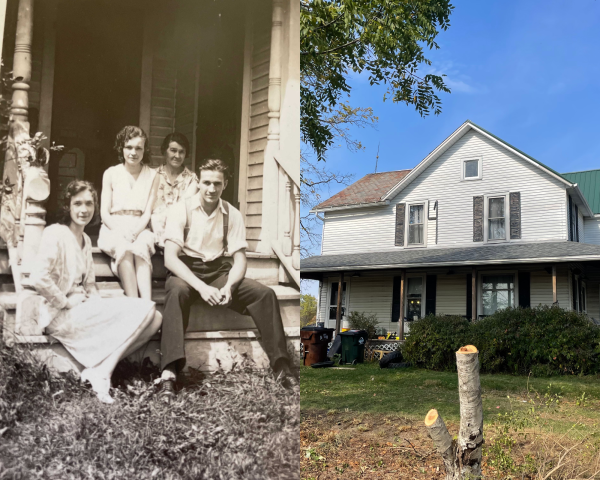
“I want them to be important in 50 years when my son is older,” she said. “It’s going to be a years-long project, but I’m enjoying every moment of it.”
When she looks back on her college experience, a few courses stand out, including classes about the Holocaust and German history taught by Steigmann-Gall.
“Especially in today’s times, I think about that class on a daily basis,” Ryan said. “I still have all of my coursework notes from that class; as I’m looking at things that are going on in the news, I’m thinking, ‘How can we relate this to previous decades?’”
Advice for Current Students
Ryan advises current Kent State students, especially those in the humanities, to recognize the value of their skills.
“A degree in the humanities absolutely will create transferable skills that are applicable in so many different fields,” she said. “You just have to be critical and analytical and figure out what your skills are, how to hone them and how to make them applicable.”
She also encourages students to reach out and make connections with people they’re interested in, and to recognize the power of a handwritten note or phone call.
###